 Unlock Full Access
 Log in

The Benefits of Phonics
The Benefits of Phonics
As a parent, you want your child to do well in school and in life, and you know that being a good reader is a crucial part of this success. In England, phonics plays an important role in how children are taught to read in the early years.
Why is Reading Important?
The National Curriculum for England highlights the importance of reading in supporting pupils' cultural, emotional, intellectual, and social development.
An important goal of early reading is to help children become fluent readers, as this supports comprehension, enjoyment of reading, and later success in school.
As their reading skills develop, pupils gain the ability to read a wide variety of material, including stories, poems and non-fiction. This extensive reading broadens their vocabulary, develops their general knowledge, and allows them to acquire self-knowledge. It is also believed that when children share in the lives of others, they see the world through new eyes and develop a greater capacity for empathy. In addition, reading supports cognitive development by strengthening neural pathways in the brain.
The National Curriculum for England describes the importance of reading in the following way:
"Reading … feeds pupils’ imagination and opens up a treasure-house of wonder and joy for curious young minds."
How Can Phonics Help?
Phonics is an important tool to develop reading fluency.
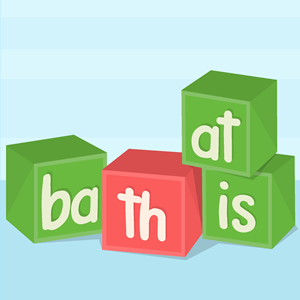
Phonics teaches pupils that letters they see written on a page are part of a code which represents the sounds of spoken language, and provides them with the tools to understand that code. With these skills they develop into fluent readers who are able to quickly recognise familiar words and to easily sound out new words they encounter.
Phonics allows young readers to develop their reading comprehension. With practice, pupils' decoding skills can become more automatic, allowing them to focus on understanding the overall meaning of what they are reading.
Phonics also raises children's phonemic awareness. This is the ability to understand how words are formed, and to break them down into individual sounds. For example, if a teacher asks "what are the sounds in the word ball" pupils will answer "b" "aw" and "l". This helps them not only with reading but also with spelling and writing.
Research studies have shown that children who receive consistent phonics teaching in the early years can make strong progress in reading and spelling, particularly when additional support is provided for those who need it.
Earlier research has also highlighted the potential benefits of a phonics-based approach, particularly for children who may be at risk of falling behind in reading.
Concerns about literacy levels have highlighted the importance of supporting children effectively in learning to read. Phonics is widely used as part of this support, alongside other approaches that help children develop confidence and enjoyment in reading.
Phonics has additional benefits that go beyond reading and writing
It is also believed that phonics has additional benefits that go beyond reading and writing. It may also help to develop general thinking skills. In the 1970s, the United States Department of Education conducted a huge educational experiment known as 'Project Follow Through'. The study found that students in phonics-based programmes demonstrated stronger academic skills, including logical reasoning. Also, Linguist Barbara Birch suggests that phonics training may enhance reasoning skills, such as probabilistic reasoning and analogy, as readers navigate the complexities of English spelling.
While children learn at their own pace, phonics works best as part of a balanced approach, combining decoding skills with strategies like recognising whole words by sight.
As a parent you can help your child to develop a love of reading. If you are a reader yourself, and have plenty of books at home, you set an excellent example. You can also introduce your child to picture books before they start school, and help them to enjoy stories by regularly reading aloud to them.
Phonics Bloom provides games and practice activities that can support children as they develop these skills at school and at home.
Continue reading: Phonics Phases